
End-of-life tyres (ELTs) are a concentrated, engineered mixture of valuable materials, so they are better understood as a “resource” stream for secondary raw materials rather than a waste stream.
What is inside an ELT?
Each tyre is a composite of high‑value inputs that still retain functionality at the end of life.
- Carbon black, a high‑energy, petrochemical‑derived filler that can be recovered via pyrolysis as recovered carbon black (rCB). [alderbioinsights.co](https://www.alderbioinsights.co.uk/news-and-insights/insights/end-of-life-tyres/)
- Pyrolysis Oil which contains a significant biogenic (bio‑based) carbon share because part of every tyre is natural rubber and other biomass‑derived ingredients
- Steel, which can be separated and recycled as a substitute for virgin scrap or anthracite in steelmaking.
- Textiles and fibres, which can be recovered and used in lower‑grade applications or as auxiliary fuels
Because these constituents are embedded in every ELT, a properly managed ELT stream is effectively a pre‑concentrated mine of secondary raw materials.
Pyrolysis and chemical recovery
Advanced thermal processes unlock chemical feedstocks and high‑grade fillers from ELTs, further reinforcing their role as secondary raw material sources.
- Pyrolysis oil (TPO) can be upgraded to fuels or chemical intermediates, partially displacing fossil‑derived refinery products.
- Recovered carbon black (rCB) offers a lower‑carbon alternative to virgin carbon black, with lifecycle CO₂ reductions reported up to about 85%, reducing dependence on energy‑intensive CB production.
- Non‑condensable gas can fuel the process itself, improving energy self‑sufficiency of plants.
- Residual char and mineral fractions can be further processed into activated carbon or mineral fillers.
Industry bodies in Europe increasingly advocate recognizing ELT pyrolysis as a recycling route, which would formalize its status as a material‑recovery process rather than mere energy recovery.
Circular economy and policy perspective
From a circular‑economy viewpoint, ELTs are an established model of how “waste” can become a strategic secondary resource.
- In Europe, ELT collection and treatment rates are around 84–95%, with most ELTs going to material or energy recovery instead of landfill.
- Using ELT‑derived materials reduces demand for virgin rubber, carbon black, steel and aggregates, cutting upstream impacts such as mining, land use and long‑distance transport.
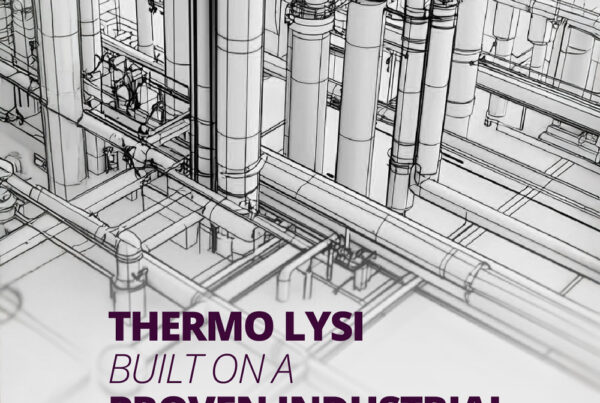
Thermo Lysi SA, a waste tyre pyrolysis plant in Greece, demonstrates a viable, certified value chains that turn ELTs into reliable secondary raw materials for multiple industries. ELTs enter as a regulated “waste”, but leave as rCB, steel, oil and gas, all of which are traded into manufacturing and energy markets as secondary raw materials.